
What Are the Features That Distinguish Pico Wave Laser from Other Tattoo Removal Devices?
What Are the Features That Distinguish Pico Wave Laser from Other Tattoo Removal Devices?
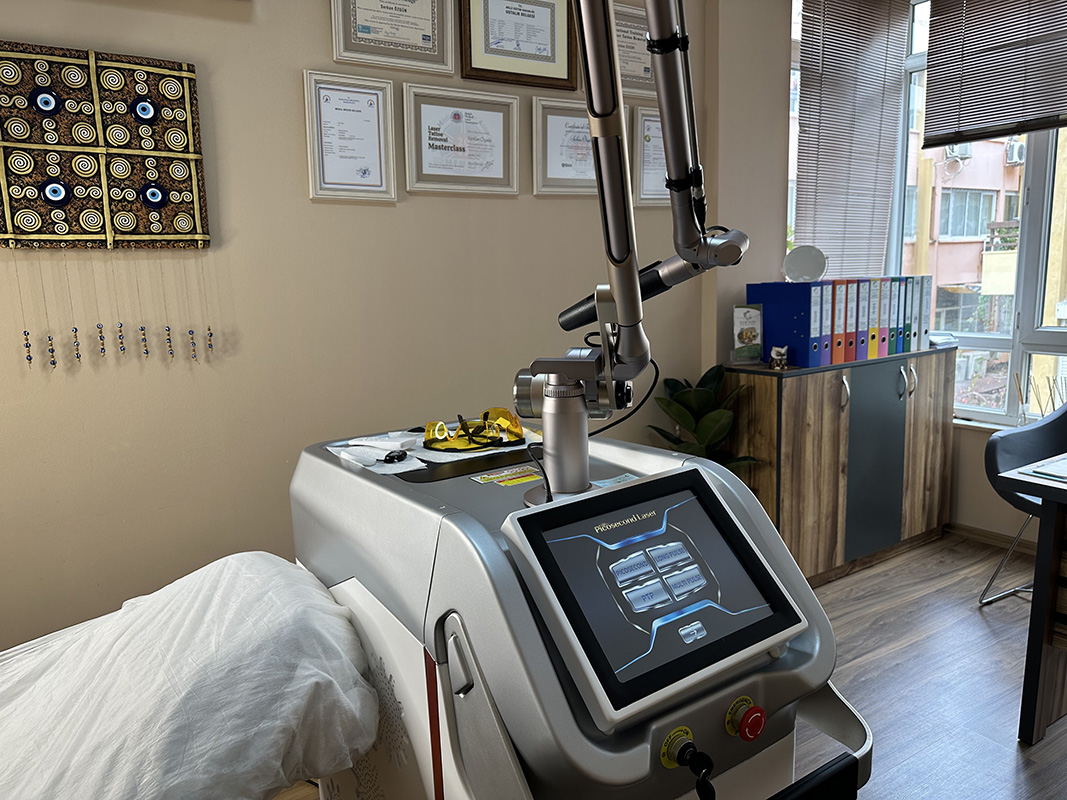
PicoWave laser, also known as a picosecond laser, has several unique features that differentiate it from other tattoo removal devices. Tattoo removal has been a continuously evolving practice for many years. In the early stages of this technology, Q-switched lasers were commonly used. These systems worked by breaking down colored pigments embedded in the skin through heat and photomechanical effects.
Recently, picosecond lasers have become more prominent. These next-generation devices produce light pulses that are approximately 1,000 times shorter than nanosecond pulses. This difference provides various advantages, from the way the laser interacts with tattoo pigments to the overall treatment outcomes. In general, their distinctive features can be listed as follows:
1. Pulse Duration and Mechanism
In Q-switched lasers, pulse durations are measured in nanoseconds. The laser pulse typically ranges from several hundred picoseconds to a few nanoseconds.
PicoWave lasers reduce the pulse duration to the picosecond level, delivering energy nearly 1,000 times faster.
The energy emitted from a picosecond laser generates a strong acoustic shockwave within the pigment particles. As a result of this mechanical effect, pigments are fragmented into much smaller particles, making it easier for the body to eliminate them naturally.
2. Color Spectrum and Effectiveness Level
Picosecond lasers have the flexibility to operate at different wavelengths. This allows for high efficiency even in challenging tones such as green and blue pigments.
Compared to nanosecond lasers, picosecond systems demonstrate significantly higher effectiveness on purple shades and deeper dermal pigments. These devices are designed to target a wide color range, including orange, red, black, and blue. The wavelength can be adjusted according to the targeted pigment, ensuring more precise and efficient treatment.
3. Power and Treatment Duration
Although nanosecond lasers break down pigment particles, the fragments may remain relatively large in size. Picosecond lasers, considered advanced technology, break these particles into much finer pieces.
Because the pigment fragments are smaller, the lymphatic system can clear them more quickly. As a result, treatments performed with picosecond lasers may require fewer sessions compared to nanosecond systems.
4. Effects on the Skin
Thanks to the shorter pulse duration, the laser energy is concentrated on the pigment while limiting heat transfer to surrounding tissues.
Compared to nanosecond lasers, picosecond systems cause less thermal damage. Consequently, the risk of side effects such as hypopigmentation is reduced.
5. Advanced Safety Mechanisms
Picosecond lasers are equipped with cooling modules that help minimize heat-related skin damage.
Some devices also feature automatic energy or power adjustments based on tattoo color. These automated systems reduce the likelihood of human error and enhance overall treatment safety.
6. Cost Comparison
It is possible to say that picosecond laser sessions are generally more expensive than nanosecond treatments. However, their effectiveness on colored tattoos and the potential need for fewer sessions increase patient satisfaction.
Shorter and more comfortable sessions are additional reasons why picosecond laser applications are often preferred. Although the initial investment cost is high, research and clinical experience indicate that treatment quality is at a very good level.
Recently, patient satisfaction rates have increased significantly. In some cases, even black tattoos may show 60% to 70% lightening after a single session.
Furthermore, with the integration of artificial intelligence support, personalized approaches based on skin imaging are being developed.
7. Points to Consider
Operating a picosecond laser requires a certain level of professional training. Physicians or operators are expected to complete specialized education to use the device correctly.
Expertise is especially important when determining session intervals, energy levels, and wavelength selection.
Picosecond-level devices are relatively expensive. Clinics planning to use this technology should conduct proper financial planning. However, increased patient satisfaction, higher clinic preference rates, and reduced session numbers can help offset the investment over time.
In conclusion, PicoWave picosecond laser technology is considered one of the most effective solutions for tattoo removal today due to its faster pulse duration, stronger photomechanical effect, broader color targeting capability, reduced thermal damage, and advanced safety features.